4 guides · official facts only · no fabricated numbers
100 Miles Down the River guides
This hub collects everything we can say about the river with confidence. Every mechanic description traces back to the game's official description, its 13 badge definitions, or gameplay footage we link and credit — we do not invent drop rates, spawn tables or stats that the game does not publish. Where a number exists, it comes from Roblox's own APIs with a capture date.
All guides

Beginner guide — your first Cast Off
How joining a server, building your first raft and surviving the opening miles actually work, built on the official badge ladder.
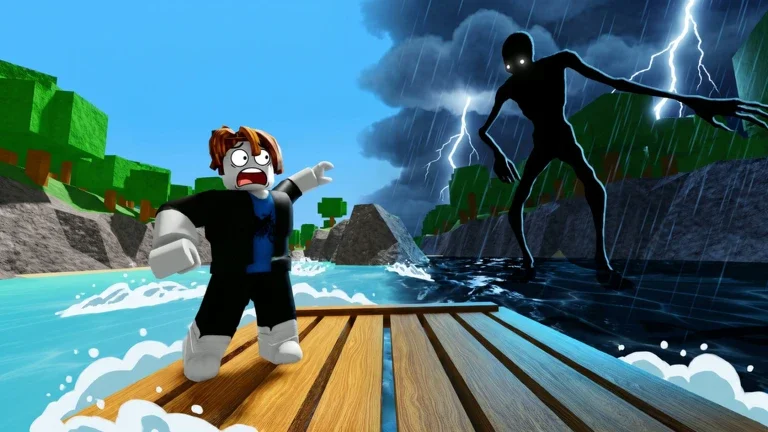
How to survive the storm
The storm's hunter, the stay-in-the-light rule, ghost states and Spark revives — every mechanic tied to its official badge.
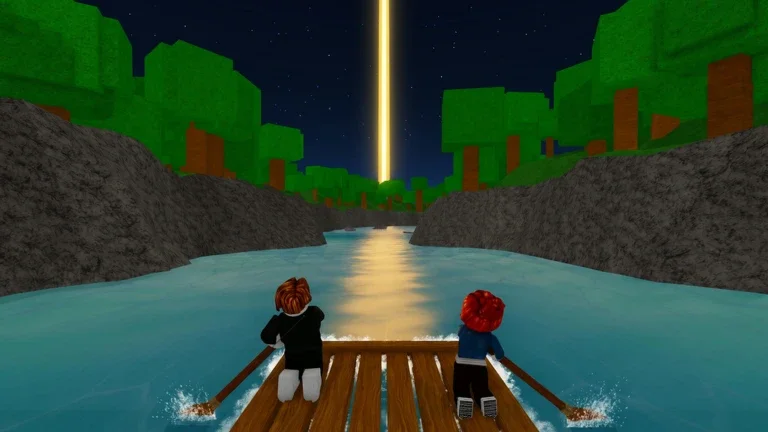
Raft building & co-op play
What the co-op badges — Bring a Friend, Lifesaver, Back to Life — expect from a 20-player crew, and how to organize one.
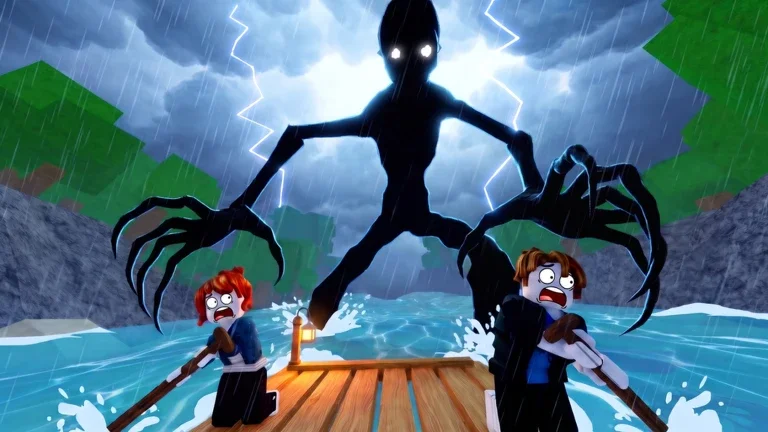
The road to Mile 100
The official rarity numbers for every milestone, what they imply about run length, and what the rarest badges demand.
Suggested order
A learning path for the river
The guides build on each other, and reading them in the wrong order makes the game feel more opaque than it is. The path that works for most crews:
1. Beginner guide — the first ten miles
Joining, rafting, the Cast Off badge and what a normal first session looks like. Read this before your first launch; the badge table in it shows what to expect from the opening miles.
2. How to survive — the storm routine
The core loop: the hunter, the light, ghosts and Sparks. This is the guide everything else assumes you know — the difference between surviving one storm and twenty is a drilled routine.
3. Raft building & co-op — running a crew
Five roles, revive workflow, and how the co-op badges (Bring a Friend, Lifesaver, Back to Life) turn teamwork into tracked progress. For anyone playing with more than two people.
4. The road to Mile 100 — the endgame read
What the official rarity funnel implies about deep runs, session length and the three rarest achievements in the game. Read it when Mile 25 stops being a wall.
Honest limits
What these guides deliberately don't claim
You will not find monster damage numbers, spawn tables, raft part statistics or “best build” tier lists here — not because those things are boring, but because the game does not publish them and we refuse to invent them. Sites that quote such numbers with confidence cannot show where they came from; the badge statistics on this site can always be traced to Roblox's own API, with a capture date.
What you get instead: mechanics grounded in official text (every badge description quoted verbatim), procedures that survive the game's near-daily updates, and honest labels whenever a claim rests on observation rather than documentation. When the game changes something material, the affected guide's date changes — and the update tracker records the publish that did it.
Sources
What backs every claim on this hub
Three source layers, in strict order. First, official APIs: game identity, live statistics and all badge records come from Roblox' public endpoints — identity fields are stable, statistics carry capture dates, and the badges API is the same one Roblox' own site uses. Second, official text: the game description and every badge description are quoted verbatim; when a guide says “Back to Life requires grabbing a Spark,” that sentence is the developer's own. Third, credited footage: where mechanics lack documentation, guides point to specific videos — embedded, credited, dated — and say plainly that the claim is observational.
What never appears: community “leaks,” unsourced spreadsheets, stats copied from other fan sites, or invented drop rates. If this hub ever publishes a number you can't trace to one of the three layers, treat it as a bug and tell us.
Questions this hub gets asked
Do I need to read the guides in order?
No, but the suggested order above exists for a reason: storm routine makes crew roles make sense, and crew roles make the endgame numbers make sense. Jumping straight to Mile 100 advice without the survival routine is how crews end up with strong opinions and short runs.
Why don't you publish a tier list?
Because the game publishes no item statistics, upgrade costs or part values to tier. Ranking unverifiable things is exactly the practice this site exists to counter — every ranking here would be fiction with formatting.
Will these guides go stale?
The game ships updates on most days, so any guide that names specific behaviors carries a date and gets re-checked when the update tracker shows a meaningful publish. Procedures survive patches better than stat dumps — which is one more reason these guides are written as routines.
Can I suggest a guide topic?
Yes — the contact page is open. The bar is the same as everywhere on this site: if a topic can't be written honestly with the three source layers, we'd rather leave it unwritten.
I found a fact that looks wrong — what happens next?
Email us the page and the sentence. Every claim here carries a date and a source layer, so a correction either takes minutes (re-pull the API, fix the sentence) or gets an honest note explaining what can and can't be verified. We'd rather show a gap than paper over it.
Vocabulary
The river's own words
The community talks fast, and half the confusion comes from five words the game itself defines. Learn these and every guide on this site reads cleaner:
- The light
- The raft's defense against the hunter. “Stay in the light” is the game's one published survival rule — light ownership is a job, not a decoration.
- Ghost
- Your state after being knocked down. Not an exit — a second job: reach a Spark, or wait for your crew to revive you. (icon: Back to Life badge)
- Spark
- The pickup that returns a ghost to life. Official proof: the Back to Life badge, “Come back to life as a ghost by grabbing a Spark.”
- Knockdown
- The normal failure state of a bad storm encounter — proven by the Untouched badge, which asks for Mile 25 “without ever getting knocked down.”
- Journal pages
- Collectible notes scattered along the river. Finding every one earns Full Journal — 52 players worldwide at our last count.
- Mile markers
- The six checkpoints (Miles 1, 10, 25, 50, 75, 100) whose badges double as the game's published difficulty curve.




Badge icons above are the official art from each badge's Roblox page.
How these guides are written
Facts first, speculation labeled
100 Miles Down the River updates almost daily, and its deep mechanics (spawn behavior, damage values, raft durability) are not exposed through any public API. Our guides therefore stick to three verifiable layers: official text, official statistics, and observed footage. When something is community wisdom rather than documented fact, the guide says so in plain words. When the game changes, the guide's date changes with it.
The game is free on Roblox — no purchase needed for any guide on this site.